Selling a Collection You Inherited (or Outgrew)
By Nathan Wiebe, CPA — collector, and a buyer and seller of cards. Published July 11, 2026.
Sort a collection before you sell it: age, who's on the card, and condition are the three things that move value. A local shop sale is fastest but pays least; consignment and selling it yourself net more but take longer. A card worth real money is usually worth grading first — check the value gap before you decide.
A shoebox from a parent's closet, a binder from your own childhood, a collection someone left behind — sooner or later, most people end up holding a stack of cards they don't know the value of. The honest answer is that most of it is probably just cards: fun to flip through, not worth much on their own. But "most" isn't "all," and it's worth ten minutes of sorting before you assume the whole box is worthless, or before you accept the first offer someone makes for it sight unseen. This guide walks through how to tell what's worth a closer look, the realistic ways to actually sell, and when it's worth grading a card before you sell it at all.
Is Anything Actually Valuable?
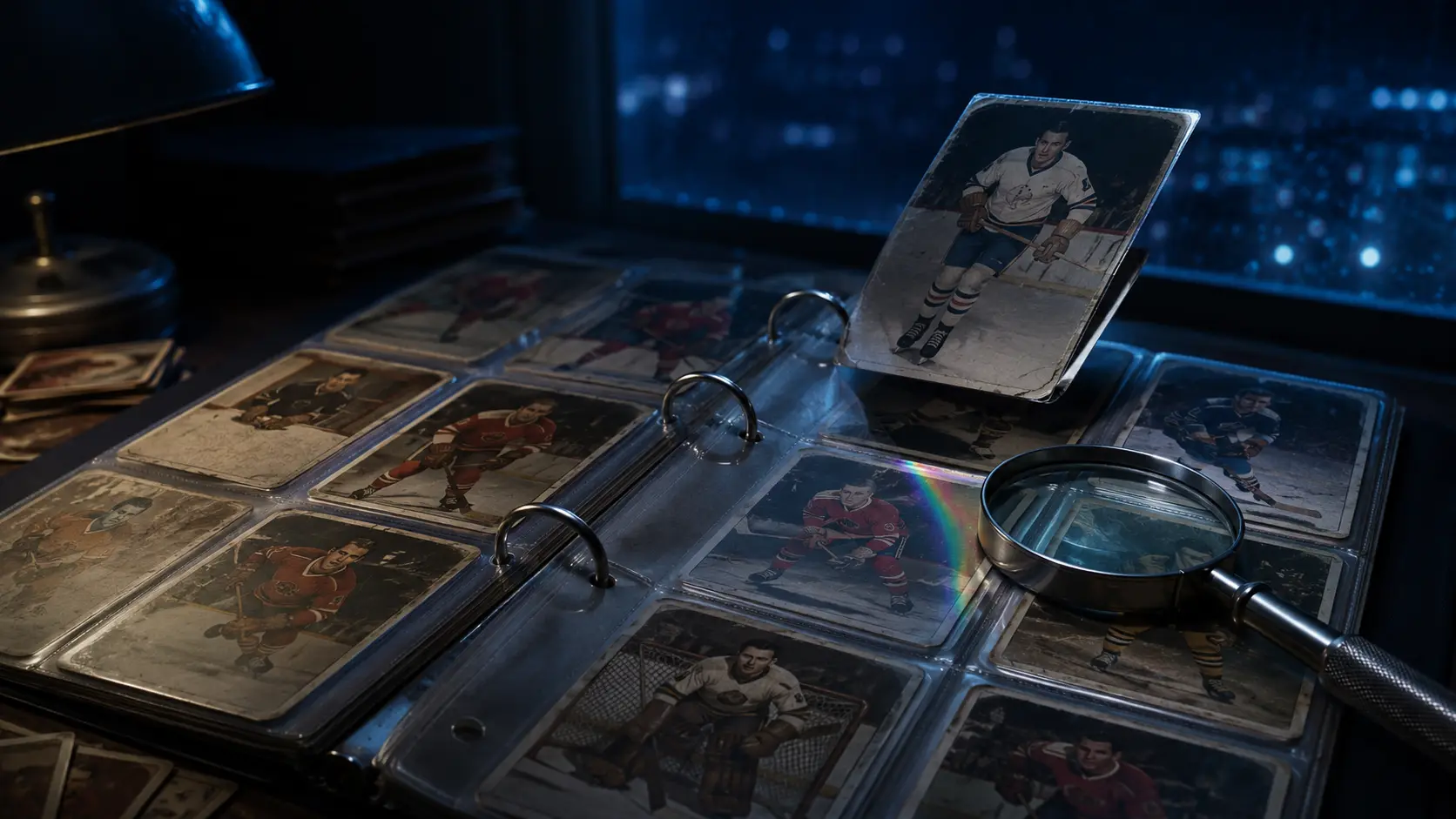
Three things move the needle more than anything else. Age matters, but not evenly — genuinely vintage cards (mid-century and earlier) tend to hold value simply because fewer of them survived in any condition, while a common modern card is rarely worth much regardless of how old it feels to you. Who's on it matters more than most people expect: a star player, and especially a "rookie card" (a player's first officially licensed card, generally the most sought-after card of that player's career), is far more likely to carry real value than a random veteran or a team you've never heard of. And conditionis where the loupe look comes in — pull anything promising into good light and look closely, ideally with a loupe (a small handheld magnifier collectors use to check a card's surface), at the corners, edges, and surface. Sharp corners, no creases, and a clean surface free of scratches or stains are what separate a card worth pursuing further from one that's just a card.
Your Options, Ranked by Effort vs. Return
There's no single right way to sell a collection — it depends on how much time you want to spend versus how much of the final sale price you want to keep.
- Local shop sale — walk in, get an on-the-spot offer, walk out with cash the same day. It's the least effort by far, but the price reflects the fact that the shop still has to resell what they buy from you, so it's typically the lowest of these four options. Our directory of 727 shops across 243 Canadian cities is a good place to find one near you. Shops in our directory that spell out card buying among their services include 306 Sports Cards in Saskatoon, SK, 401 Games Vaughan in Vaughan, ON, and We Got Gamez in Whitby, ON.
- Consignment — a shop sells your cards on your behalf and takes an agreed cut once they sell, rather than buying them from you outright. It usually nets you more than a straight sale since you're not selling into the shop's own margin, but it takes longer, since your cards sell at whatever pace the shop's customers actually buy them. Not every shop offers it, so ask directly.
- Selling it yourself (eBay or similar) — the highest potential return, since there's no middleman taking a cut, but also the most work: photographing each card, writing listings, packing and shipping every sale, and handling buyer questions and the occasional return yourself.
- A show table — renting or sharing a table at a card show puts you face-to-face with buyers, and whatever sells is same-day cash. Weigh the table fee and a full day of your time against it, and know nothing is guaranteed to sell — but you'll see in real time what collectors are actually looking for.
Why Sight-Unseen Bulk Offers Run Low
It's common to get an offer for "the whole box" or "the whole binder" as one flat number, sight unseen. Those offers are almost always priced for the worst realistic case — hidden condition problems, mostly low-value commons (the everyday cards that make up the bulk of any collection), and nothing genuinely worth a premium mixed in — because the buyer has no way to know otherwise until they've sorted it themselves. Doing that sorting yourself first, and pulling out anything that actually clears the bar above, usually nets more in total than handing over one lump sum for everything unseen. It takes longer, but it's the difference between someone else finding the good cards in your collection and you finding them yourself. The same logic applies to any "we buy collections" offer that quotes a price before actually seeing what's in the box — treat it as a starting point for a conversation, not a final number, and don't feel pressured to accept it on the spot.
When Grading First Makes Sense
Grading (having a third-party company examine a card and seal it in a tamper-evident holder with a numeric grade) can raise what a card is worth to a buyer, but it costs money, takes time, and only pays off on cards that clear a real value bar to begin with — it isn't worth doing to everything in the box. If you're not sure whether a specific card is a candidate, our card grading 101 guide walks through how to decide. If you've already decided something's worth submitting and you're doing it from Canada, our PSA submission guide covers the three routes collectors here actually use.
Getting Ready to Sell
However you end up selling, a little prep goes a long way. Sort into rough tiers — obviously worth a closer look, maybe, and probably not — so you're not re-evaluating the same pile every time you talk to a buyer. Slide anything in the "worth a closer look" pile into a penny sleeve or toploader (a thin plastic sleeve and a rigid plastic holder — the standard cheap protection any card shop sells) before it changes hands anywhere, so a shop, a show buyer, or a shipping box can't be the thing that knocks a card down a grade. And snap a few photos of anything promising before you hand it over — cheap insurance if you ever need to reference its condition later. None of this needs to be fancy: a phone camera, a few plastic sleeves from any shop or big-box store, and an hour of sorting on a kitchen table is genuinely enough prep for most collections, whether you end up selling it all at once or a piece at a time over several months.
Still not sure what any of it is actually worth? Our appraisal guide walks through how to size up a collection before you sell. And if you're wondering whether a sale creates a tax bill, our guide to tax on selling cards in Canada covers the $1,000 rule that means most collector sales produce nothing to report.
FAQ
- How do I know if an inherited card collection is worth anything?
- Age, who's on the card, and condition move the needle most. Genuinely vintage cards, star players and rookie cards, and anything with sharp corners and no creases are worth a closer look. Most of any collection is still just cards — but it's worth ten minutes of sorting before assuming the whole box is worthless.
- What is the fastest way to sell a card collection?
- A local shop sale is the least effort by far — walk in, get an on-the-spot offer, walk out with cash the same day. It typically pays less than consignment or selling it yourself, since the shop still has to resell it. 194 shops in our directory list buying collections as a service. Find a shop that buys near you
- Should I get cards graded before selling a collection?
- Only the ones that clear a real value bar — grading costs money and takes time, and it only pays off when the gap between raw and graded value covers that cost. Our card grading 101 guide walks through how to decide which cards, if any, are worth it. How to decide if a card is worth grading
- Why do sight-unseen bulk offers for a whole collection run low?
- Because the buyer has no way to know what's actually in the box until they sort it themselves, so a flat offer is priced for the worst realistic case. Sorting it yourself first and pulling out anything that clears the value bar usually nets more in total than one lump-sum offer for everything unseen.
Not sure where to start, or found a shop that buys collections we're missing? Let us know.